
Why We’re Critical
On criticism, cultural responsibility, and the practice of architecture.
5 MIN READ
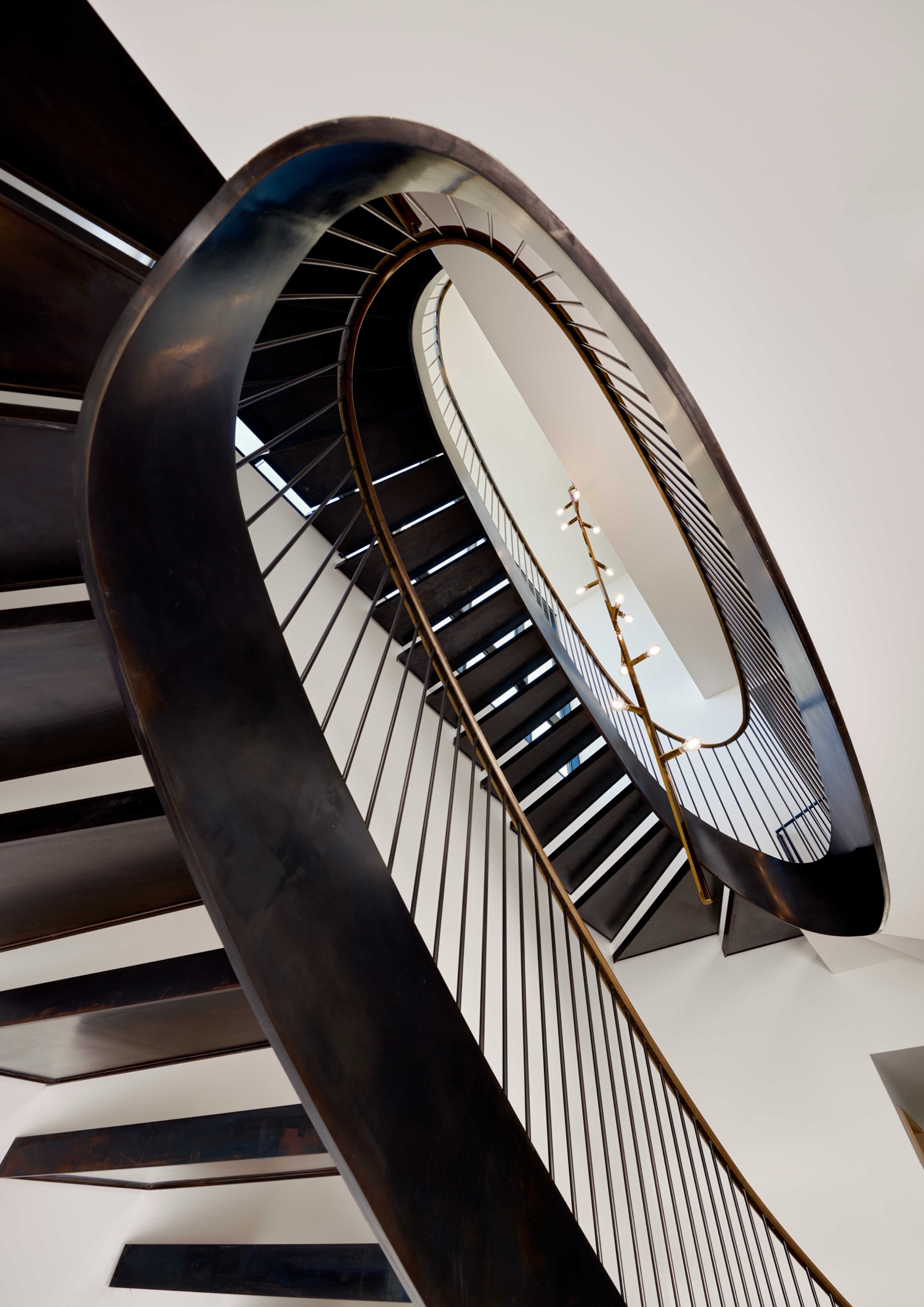
Liberty Hill Home, San Francisco
ROSS LEVY
Architecture
Culture
Criticism
I just finished reading Aaron Betsky’s piece on the new Lucas Museum in Los Angeles by MAD Architects. In it he alternately lauds and loathes the billion-dollar project.
“The building is good because it has a strong exterior aesthetic that continues into its public spaces: its main interior is disappointing because that look and feel disappears and another one, which I do not like, appears.”
That’s his summary commentary on the structural form and interior fit-out. He goes on to dissect the underpinnings of the project’s origins, a project that was rejected twice in San Francisco, once in Chicago.
“I believe I can ground my judgement not only in a critique of the combination of what I think is a demeaning populism behind which a lavish elitism and self-aggrandizement of a person who might make good movies but seems to have sponsored a monument that displays no discernment in the field of art….”
Some might find these to be harsh words about a brand-new institution that is a gift to the city of Los Angeles in the run-up to the ‘28 Olympics, but that doesn’t make them untrue or irrelevant. Quite the contrary, it underscores the necessity of thinking about what we do, what we have done and how it might be done better.
All of this reminds me of my return to California after completing graduate work in Architecture at The Harvard Graduate School of Design. My best friend picked me up from the airport and as we drove, I subjected him to a running narrative of my impressions of the urban (or really since it was LA), the sprawl-urban landscape around us. After listening to my diatribe for long enough, he asked, “what did they do to you back there?” He was right to ask. I was being overly critical, exercising my newfound rhetorical muscles through the lens with which I’d been taught to view the world. Like every kid with a new toy, I wanted to play with it. There is a related problem: in the halls of architectural academia, we’d been schooled in a lexicon that, while it had roots in the English language, was unintelligible to anyone who wasn’t similarly educated. Witness this gem of self-reflexive thinking by the esteemed critic Michael Sorkin:
“But a robust critical field requires self-criticism and the critique of critique is part of the job”
Believe it or not, that actually makes sense, you just need to read it a couple of times. Later, he gets to the point and makes a compelling case.
“But the question to be asked is whose interests are served and, especially, how particular interests shape relevant ideas of the good. Thus, a political criticism is urgently needed for a planet that is clearly going to hell in a handcart, even as it rejects the reflexive styles of analysis that have frequently been associated with its standard models. Form is as form does and we don’t want to be victimised by the taste of Comrade Stalin, Anna Wintour, Prince Charles, or any other overly empowered arbiter.”
This is why we criticize. It helps us to place our efforts in a larger global, economic and political context. It asks that our architecture be relevant, not only as an internal discourse but as a social one. After all, our work is public and, despite our own post-rationalizations, is judged by the general public that sees it and the specific individuals that inhabit it. Sorkin puts it in plainer, or at least as linguistically plain, terms as he can….
“I don’t mean to trivialise either the function or the concept of criticism but − just like architecture − it must also be judged by its effects. While our pronouncements may have useful consequences for the general conditions of culture, for the city, for the refinement of the terms of discussion, it is precisely the critic’s mission to help vet the instigation of the social and formal parameters of building. “
Criticism is not something to be undertaken lightly, displayed like intellectual plumage, or used to undermine the efforts of our colleagues. It is, rather, a form of reflection.
What have we done, why did we do it, and how can we learn from it? It is a necessary part of a continuous effort to refine and progress our productions, what the Japanese call “kaizen.” As Architects, we are responsible for the built world, a serious obligation. In that sense, criticism is the most literal (and critical) application of our knowledge. It helps us to understand what influences us, how it has been materialized, and whether that materialization is an accurate reflection of the original intention. It motivates our actions and requires that we be accountable to ourselves, that we have integrity in our work. Technical proficiency is one thing; cultural relevance and critical commentary are others. Together they are a mutually reinforcing set of professional skills that any responsible architect, designer or anyone who participates in the conscious creation of culture must exercise. After all, if we don’t exercise our full professional capacity, who will?
◯ Ross Levy
Levy Art + Architecture
CONTINUE READING
ETHOS
STUDIO
Levy Art + Architecture
3150 18th St #216
San Francisco, CA 94110
CONTACT & SOCIAL
info@levyaa.com

© Levy Art + Architecture 2026 · Privacy
STUDIO
Levy Art + Architecture
3150 18th St #216
San Francisco, CA 94110
CONTACT & SOCIAL
info@levyaa.com
© Levy Art + Architecture 2026 · Privacy