The Value Proposition of Working with an Architect
On technology, judgement, and the enduring human role in architecture.
4 MIN READ
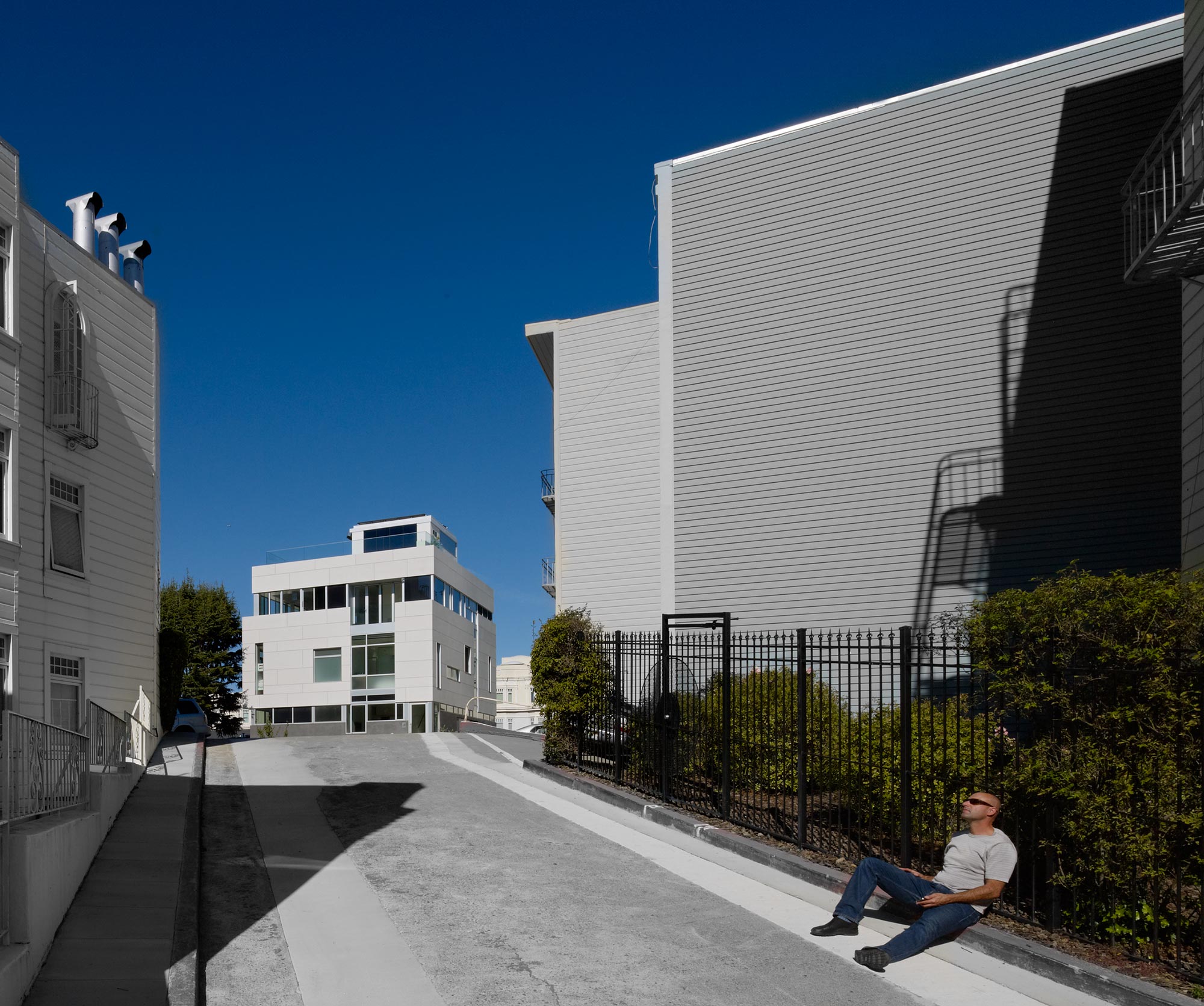
Russian Hill Residences, San Francisco
ROSS LEVY
Architecture
Technology
Practice
Architects and designers bring more than technical expertise and political acumen to building projects; they bring years of experience, refined sensibilities and a holistic vision to their work. More than that, they translate the aspirations of their clients from idealized hopes to built forms. As technology continues to evolve and provide all of us with greater powers of visualization, how do the roles of the Architect and the designers change?
Technology has been altering the practice of architecture since the widespread adoption of CAD (computer-aided drafting) in the nineteen eighties. This had the initial effect of homogenizing the design of buildings as the software interface was cumbersome and architects were more focused on their screens than the designs that they were creating. Historically, there were conventions in making drawings; they were related to each other on the drafting board, constructed by pulling lines from plans to generate elevations and sections. This had the effect of ensuring that design was integrated, contemplated in three dimensions by its author. Early computer applications disassociated one drawing from another—copied and pasted, pushed around on the screen and eventually disconnected from one another—with the inherent sense of space lost.
With recent advances in software and AI applications, we have the opportunity to rediscover and expand the practice of design as an exercise in spatial and material expression. Working in three dimensions from project inception brings back the fundamental nature of volumetric planning. Bringing in powerful AI engines that quickly allow for iterations, illustrations and visualizations is an important step forward. It allows designers to test their theories and clients to see these tests, deepening the process and the necessary communication required to achieve the best result.
In this era, when all things are searchable and anyone can prompt an AI engine to develop images for them, architects and designers are more important than ever. The new tools free us from the difficult interfaces of the past. The technology frees us to work with more complex geometries and to evaluate how these shapes are to be materialized. It allows us to share these visions with our clients in a way that is intelligible to them. These tools enable more and better design work, while simplifying the documentation process. They augment the designer’s role, and make it all the more important. That human function—the judgement, the interpretation, the subtle attention to detail in design and administration—is aided by technology, not replaced, but rather supported and enhanced.
◯ Ross Levy
Levy Art + Architecture
CONTINUE READING
ETHOS
STUDIO
Levy Art + Architecture
3150 18th St #216
San Francisco, CA 94110
CONTACT & SOCIAL
info@levyaa.com

© Levy Art + Architecture 2026 · Privacy
STUDIO
Levy Art + Architecture
3150 18th St #216
San Francisco, CA 94110
CONTACT & SOCIAL
info@levyaa.com
© Levy Art + Architecture 2026 · Privacy